Posts

What types of stains are best targeted by detergent enzymes.

Image
Enzymes play different roles in various industries, and in the detergent industry, they have an important function in removing stains. Did you know that the detergent we use to clean our clothes is made with enzymes to make our clothes stain-free? To find out more about it, let's look at it more closely. So, in today's blog, we will check the types of stains which are best targeted by detergent enzymes.   Enzyme-based soap formulations, also referred to as biological detergents, include particular cleaning enzymes, each of which targets a different kind of stain. Cleaning and stain elimination involve collaboration. Imagine enzymes as position athletes, each one skilled in a specific task. Proteins, starches, and fats are just a few of the different types of stains. Several enzymes are present in Heritage Park Luxury All-Purpose Detergent, and they cooperate with our dirt-releasing surfactant and tough stains to eliminate them. There are many enzyme based detergent which eff...
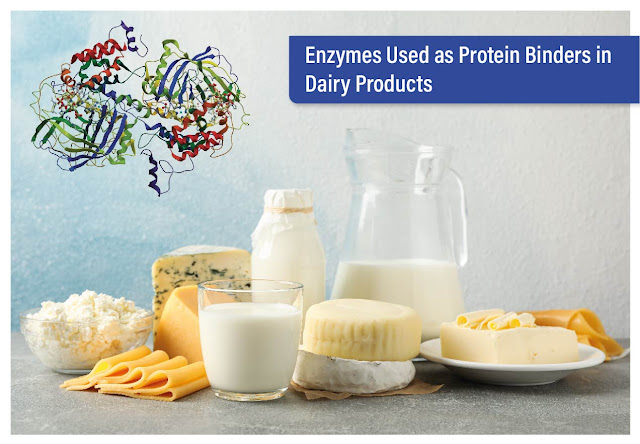
Enzymes Used as Protein Binders in Dairy Products

Image
  By catalysing various biochemical processes involved in food production; Enzymes play a vital role in the food processing sector. Enzymes can increase the nutritional value and quality of food products while also improving the productivity of food manufacturing. Protein binders are one of the main uses of enzymes in the dairy business. In this blog, we'll look in more detail at Enzymes used as Protein Binders in Dairy Products and their advantages. Binders for Protein in Dairy Products Before we start, it's crucial to understand the term, " enzymatic coagulation of milk , Enzymatic coagulation of milk is a process used in cheese-making that involves the use of enzymes to curdle or coagulate milk proteins, forming solid curds and liquid whey; Additional proteins may be added as binders to these goods to enhance their functionality and texture. Curd is a prime example of the usage of enzymes. Enzymes in the curd-making process are only one enzyme, i.e. renin enzyme.   ...

Enzymes for Distillery: Why they are The Best to Distil Alcohol?

Image
Enzymes are essential in various industries, and their use in the alcohol industry is both interesting and important to understand. In particular, enzymes are crucial for distilling alcohol, with examples including glucoamylase and other enzymes. Overall, Enzymes play a crucial role in the alcohol industry. To better understand this topic, it's helpful to first understand some key terms. Alcohol enzymes include glucoamylase and other enzymes, which are used to break alcohol molecules, but before we dive into the role of enzymes in the distilling process, we have to comprehend some terms like Distilling, Fermentation, microorganisms and so on. Let's understand it in brief. Fermentation is the process by which sugars are converted into alcohol by yeast. Yeast is a type of microorganism that consumes the sugars present in fruits or grains, producing alcohol and carbon dioxide as byproducts. For example, to make beer, malted grains (usually barley) are mashed and mixed wi...

Unlocking the Power of Enzymes in Industrial Production

Image
Enzymes are crucial biological catalysts that play an important role in various industries such as food, animal feed, textiles, and medicine by increasing efficiency and reducing costs. These industries make use of various industrial enzymes such as Trypsin, Alpha Amylase, Papain, Lactase, and others to streamline production. Here, we will examine how each industry utilizes these enzymes. So Here We go!  Let's begin with the very fascinating industry, the Food Industry. Food Industry:  The food industry relies heavily on enzymes in various processes, such as baking, brewing, fruit juice production, and dairy product manufacturing. For example, in baking, enzymes are used to improve the flavor and texture of bread by converting complex carbohydrates into simple sugars, resulting in a more desirable taste and texture. Trypsin is a crucial enzyme involved in the digestion of proteins. It continues the digestive process that starts in the stomach by breaking down proteins in the ...

What are the Advantages of Using Enzymes in Textile Desizing?

Image
  A desizing enzyme is a substance created through the fermentation of starch enzymes and other useful chemicals by microbes. When used in the textile business, it aids in the breakdown of the starch in the fabric size into oligosaccharides and short-chain dextrin, making it very simple to remove during the final treatment process. Cotton, silk, Vinyl on, viscose fiber, mixed fabric, yarn-dyed poplin, and chemical fibre blended fabric can all be treated with desizing enzymes. When we talk about Textile enzymes , Amylase is a crucial enzyme for the textile industry .     It is mostly used in the Desizing process. The Desizing Process in the Textile Industry, Enzymatic Desizing, and the Benefits of Using Enzymes in the Textile Industry will now be discussed.   Textile desizing procedure         The fibres must be sized before weaving to increase fastness. Size removal is necessary for cloth dyeing, bleaching, and printing procedures. T...

How important is the Invertase Enzyme to Our Everyday lives?

Image
Did you know about an Invertase enzyme and how it’s important in our day-to-day life? Here, starting with the Short Preface, The Invertase enzyme can hydrolyze the bond between glucose and fructose, and invertase is crucial for the digestion of dietary carbohydrates and can provide an immediate energy boost to our body.   Let's explore one of the Significant Enzymes in our Everyday Life, "The Invertase Enzyme" in more detail, so here we go! What is an Invertase enzyme ? An Invertase enzyme facilitates the hydrolysis (decomposition) of sucrose (table sugar). Inverted sugar syrup is the name for the fructose and glucose mixture that results. Sucrases are related to invertases. A similar mixture of glucose and fructose is produced when sucrose is hydrolyzed by invertases and sucrases. The O-C(fructose) bond is broken by invertases, whereas the O-C(glucose) bond is broken by sucrases. Invertase, also known as beta-fructofuranosidase , is a glycoprotein with a pre...

Different Types of Enzymes that are Used in Textile Industry & Food Industry

Image
  Enzymes: what are they? Enzymes word may feel lesser known to you, but they are an essential factor for all biological processes occurring within human cells. And such biological processes commonly happen in milliseconds, all thanks to enzymes’ ability to function as biological catalysts. Enzymes are a substance which is effective & non-toxic with eco-friendly properties and frequently gets repeated over and over again through one specific reaction. Well, there are different types of enzymes that work under moderate pH and temperature parameters as they are natural substances and sustainable alternatives for chemical processing in the textile, Food, and Pharmaceutical industries Enzyme’s Role in Textile Industry Since the 19th century, several contemporary processes have been using enzymes, which are biocatalysts. Enzymes used in the textile industry are an instance of industrial development. And because of environment-friendly and non-toxic factors, enzymes have si...